
Hello Readers and Friends!
This month, I’m diving into a trend that often catches people off guard: the sharp rise of strokes in young adults. I’m surprised at the alarming increase of strokes among adults aged 18 to 45—individuals in the prime of their lives. We’ve long been told that a stroke is an “old age” disease, but the reality is shifting. Today, more people in their 20s, 30s, and 40s are facing this crisis in the middle of their busiest years of career and family.
When I survived my own ischemic stroke, I thought I’d fought the ultimate battle. But looking at the current data—where stroke rates for young adults are climbing even as senior rates stabilize—I realize the conversation has changed. For a young adult, a stroke isn’t just a medical event; it’s a total disruption of identity, parenting, location, and financial security. Awareness in this age group isn’t just important—it’s essential!
The Modern Triggers for Young Adults
Our world has evolved and is changing since the days that we were young: there were large mainframe computers, there were face-to-face meetings, photos were kept in physical scrapbooks, and nobody really knew about the internet, let alone AI. Today’s young adults face unique vascular stressors that didn’t exist decades ago:
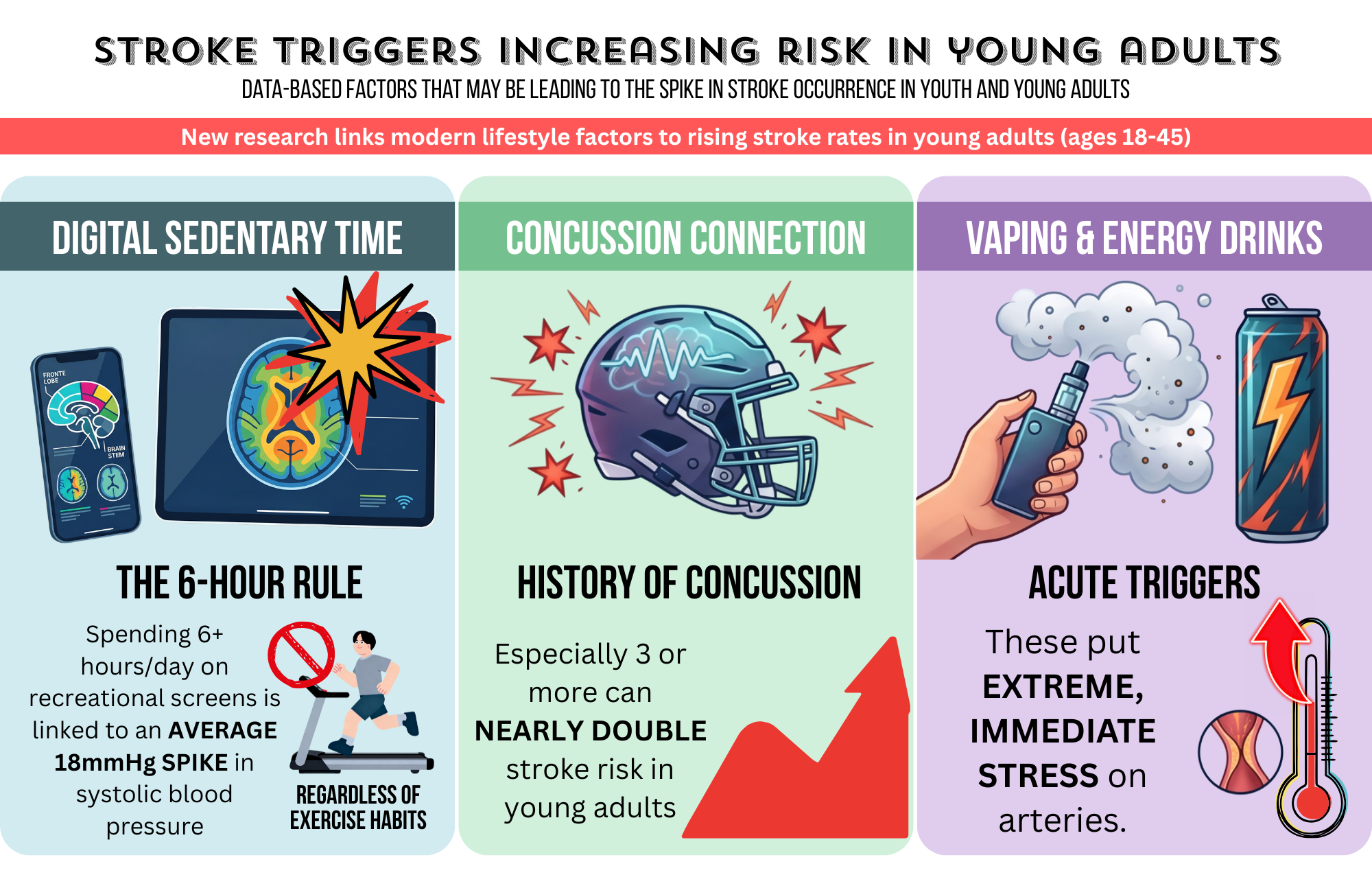
- The “6-Hour Rule” & Digital Sedentary Time: Recent data from the American College of Cardiology shows that sitting in front of screens for over six hours a day can cause high blood pressure, even in otherwise healthy people. This sharp spike can turn a normal blood pressure reading into a dangerous one. Shockingly, this risk exists even if they exercise regularly. Constant sitting and late-night blue light prevent the heart from getting the rest it needs overnight, which means that blood pressure remains high even while sleeping.
- The Concussion Connection: For the athletes in our families, ‘playing through the pain’ has a hidden cost. Penn Medicine research indicates that a history of multiple head injuries can nearly double the risk of an ischemic stroke later in life due to chronic vascular inflammation.
- Vaping & Energy Drinks: These are acute triggers. Vaping causes immediate inflammation of blood vessels, while the high caffeine in energy drinks can cause sudden spikes in heart rate and blood pressure, putting extreme, immediate stress on young arteries.
Giving the Gift of Awareness
We know the signs, and we know the stakes. Here is how you can use your experience to protect your legacy:
- Start the Conversation Early: Don’t wait until they are older to check their blood pressure. Encourage your children and grandchildren to know their numbers by age 20.
- The Digital Sunset: Suggest a household rule to put phones away an hour before bed. This helps the brain signal the body to lower blood pressure for the night.
- Monitor the Year-Round Athlete: If your grandkids are in competitive travel sports, ensure they are following strict concussion protocols. Brain rest is just as important as physical rest.
We have the data, and we have the history. 80% of strokes are preventable. We have the power to keep our families safe.
Let’s protect the next generation!
Sources & Data:
- Vaping & Vascular Inflammation: National Institute of Health
- Energy Drink Risks: Stony Brook Medicine
- Sedentary Lifestyle Trends: Mass General Brigham
- Concussions & Stroke Risk: Penn Medicine & CDC
- Screen Time & Blood Pressure: American College of Cardiology
- Light Exposure & Cardiovascular Risk: Healthline

The Journey Continues
My recovery was only the beginning. One of the reasons I wrote Relentless: How A Massive Stroke Changed My Life for the Better was to give other survivors and their families the tools I wish I had on day one. If you want to dive deeper into my story—and find a clear path for your own—you can order your copy here. Let’s rewrite the future of stroke recovery together.
Get your copy at any of the following retailers: